
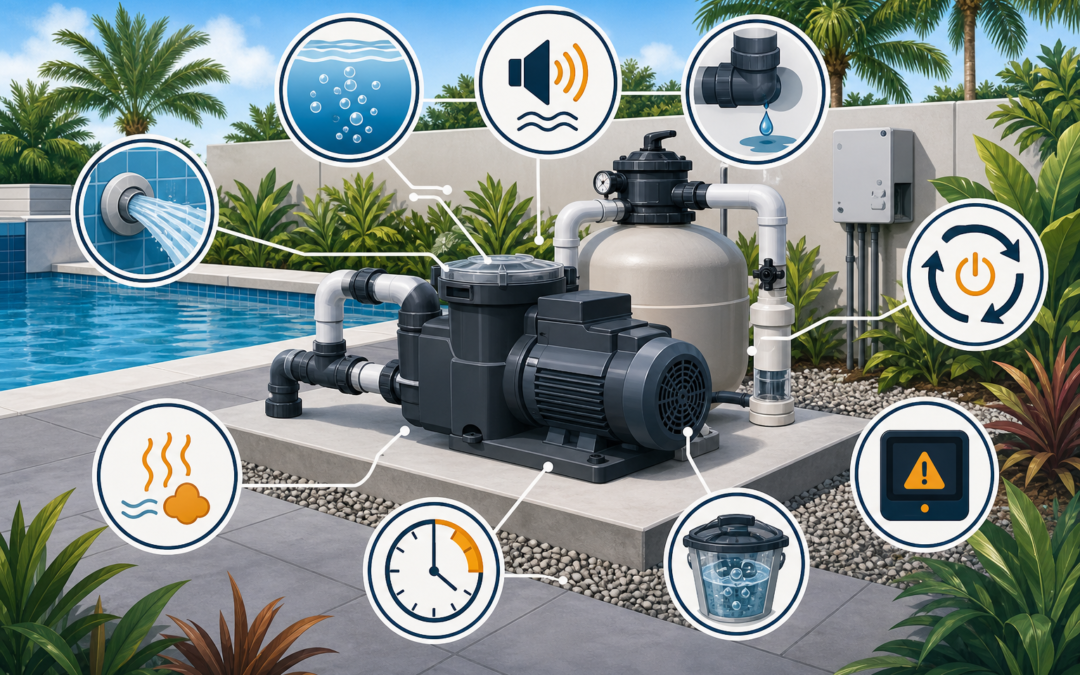
Pool pump warning signs are often changes from the way a particular system normally sounds, moves water, or completes its schedule. One unusual noise does not identify a failed motor, and one air bubble does not prove where air entered the system. Still, a noticeable change deserves attention before a small operating issue becomes prolonged downtime.
Homeowners can gather useful information without opening electrical panels, removing pump parts, or reaching into operating equipment. These nine observations help describe what changed and give an existing-equipment service provider a better starting point.
1. Return flow is weaker than normal
Reduced flow at the pool returns can be connected to more than the pump. Water level, loaded baskets, valve position, an obstructed line, filter condition, air entering the system, or a pump problem can all affect circulation. Compare the current flow with the pool’s normal behavior rather than another pool.
Notice whether every return feels weaker or only one area changed. Also note the water level, visible basket debris, and filter-pressure reading if those items are normally part of your safe observation routine. Do not dismantle equipment to search for an obstruction.
2. The pump repeatedly loses prime
A pump that will not establish or hold normal water flow needs investigation. The visible pump basket may not fill as expected, air may remain under the lid, or the pump may sound different while trying to move water.
Turn the equipment off if continued operation appears abnormal or the manufacturer’s instructions call for shutdown. Repeatedly restarting a pump without understanding the condition is not a diagnosis. Record when the problem began and whether it followed basket service, a low water level, a power interruption, or another equipment change.
3. New grinding, screeching, rattling, or humming sounds appear
Pool equipment creates normal operating sound, so the important clue is a new or worsening sound. Grinding, screeching, rattling, unusually loud vibration, or humming without normal water movement can each point to different conditions.
A short recording taken from a safe distance may help the service provider understand the complaint. Do not place a hand on moving or hot equipment, remove a motor cover, or attempt to free a component while power is available.
4. Water appears around the pump or equipment pad
A few drops after opening a basket are different from an active leak that continues while the system runs. Note where the water first appears, whether it stops when the equipment is off, and whether the area is getting wetter.
Keep people away when water is close to wiring, controls, outlets, or other electrical components. The U.S. Consumer Product Safety Commission identifies pumps and related equipment as electrical sources around pools and advises taking possible electrical hazards seriously. Its electrical safety guidance for pools and spas is a useful public reference.
5. The pump starts and stops unexpectedly
Unexpected cycling may be related to the programmed schedule, automation, a protective response, power conditions, or an equipment fault. Write down the time, displayed message, and what the pump was supposed to be doing.
Do not repeatedly reset a breaker or bypass a protective device. Electrical diagnosis, wiring, panel work, and other regulated work belong to the appropriately qualified professional. Pure Water can assess existing pool equipment within its stated service scope and explain when another licensed trade is required.
6. An alert or error code keeps returning
Modern variable-speed pumps and automation systems may display codes or status messages. Photograph the exact message before clearing it. Include the pump model, the time of day, recent weather, and whether other equipment was operating.
Use the manufacturer’s current manual for the exact model. A code is not permission to open electrical equipment or replace a part without confirming the cause.
7. Air persists in the pump basket or returns
Occasional bubbles after equipment service can behave differently from persistent air that continues during normal operation. Observe whether the pump basket remains partly empty, bubbles return to the pool, or the condition worsens at a particular speed.
Air can enter or move through a system for several reasons, and the visible symptom does not prove the location. Report the pattern instead of guessing. That distinction helps avoid replacing a pump when another part of the circulation system needs attention.
8. The normal schedule no longer keeps the water circulating
A timer, automation change, outage, or incorrect speed setting can reduce circulation even when the pump still runs. Compare the displayed schedule with the pool’s intended program and note any recent power loss or service work.
EPA ENERGY STAR explains that variable-speed pool pumps can be programmed to match different pool functions with appropriate speeds. Its pool pump guidance also explains why filtration and higher-demand functions may use different operating speeds. That does not mean one schedule fits every pool; settings should match the equipment, water needs, and manufacturer guidance.
9. Power use, heat, or odor seems different
An unexplained increase in operating time or energy use can be a reason to review the schedule and equipment condition. A hot or burning odor, visible smoke, melted material, or a motor that seems dangerously hot requires immediate caution.
Keep away, stop using the equipment when it can be done safely, and contact the appropriate professional. Do not touch wet controls or enter water if electrical safety is in doubt. Treat suspected shock, tingling, or electrical current around a pool as an emergency.
What to document before requesting service
- the pump make and model;
- the exact alert or code;
- when the change began;
- whether a storm or outage occurred;
- the programmed schedule and displayed speed;
- visible water level, bubbles, or leaks;
- filter pressure compared with the pool’s normal baseline; and
- a clear photo or short recording taken from a safe distance.
This information helps a technician reproduce an intermittent issue and distinguish a schedule problem from a circulation, equipment, or electrical concern.
Repair, adjustment, or replacement?
Pool pump warning signs do not automatically mean the entire pump needs replacement. The decision depends on the confirmed cause, equipment age and condition, repair availability, operating needs, compatibility, and the cost difference between reasonable options.
When replacement is being considered, efficiency is one factor rather than the only factor. ENERGY STAR provides certified-pump information and explains how variable-speed operation can match different functions. The correct pump and programming still depend on the existing pool system, and any related electrical or plumbing-alteration work must stay within the proper licensed scope.
Arrange an equipment review before the pattern worsens
A changing sound, recurring alert, weak flow, leak, or loss of prime is easier to discuss when the observations are specific. Avoid broad promises and quick guesses. A careful review considers the pump together with accessible baskets, valves, filtration, automation, water level, and the rest of the existing circulation system.
Pure Water Pools and Spa provides existing-equipment service and non-structural equipment work within its stated Martin and St. Lucie County service area. Review the equipment repair information or send the team the pump details. If the condition requires structural, plumbing-alteration, electrical, gas, or other licensed work, the appropriate qualified trade should handle that portion.
Request Pool Service View Equipment Services
Pool pump warning signs FAQ
Should a pool pump run if it is not moving water normally?
Do not keep operating equipment that appears unable to move water normally or that is making an abnormal sound. Follow the manufacturer’s shutdown guidance and arrange an assessment.
Does a loud pump always need replacement?
No. A sound is a symptom, not a complete diagnosis. The equipment and surrounding circulation conditions should be evaluated before choosing repair or replacement.
Can a homeowner reset a tripped breaker repeatedly?
No. A breaker that trips again can indicate a condition that needs qualified attention. Do not bypass protection or perform electrical diagnosis without the required qualifications.