If you are asking why pool water turns cloudy, the honest answer is that cloudiness is a symptom, not a diagnosis. Fine debris, reduced circulation, a loaded filter, changing water balance, heavy rain, high swimmer use, or more than one issue at once can make the water lose its normal clarity.
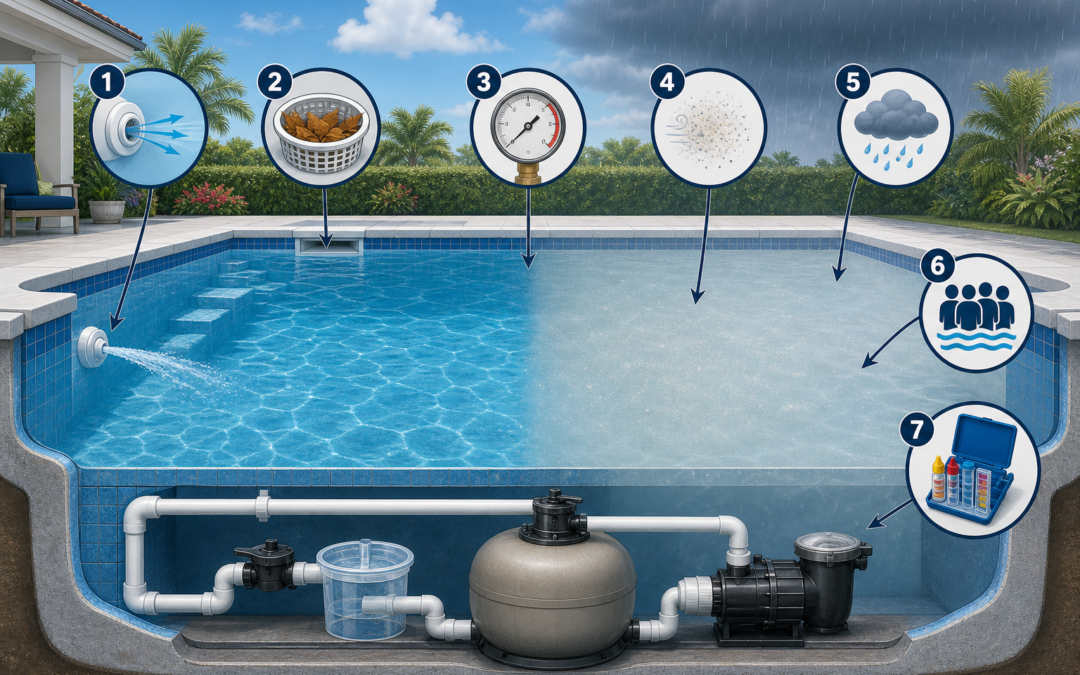
The safest first step is observation and testing—not adding several products in quick succession. These seven checks help Florida homeowners gather useful information and explain the condition to a pool professional.
In this guide
1. Can you see the pool floor and main drain?
Start with visibility. Mild haze near a light is different from water so cloudy that the drain or deepest area cannot be seen. Poor visibility is a safety concern because a person in the water can be harder to see. Keep swimmers out until the cause is addressed and the pool is visibly clear enough for safe supervision.
The CDC emphasizes healthy swimming practices and keeping pool water properly maintained. Its Healthy Swimming guidance is a useful public-health reference, but a residential pool still needs testing and equipment-specific evaluation.
2. Is the pump running and moving water?
Circulation carries suspended material toward the filter and helps treated water reach the pool. Look at the return flow and listen for a pump that sounds different from normal. Check whether a timer, automation schedule, or recent power interruption may have reduced the run time.
Do not open electrical panels, remove pump components, or reach into operating equipment. If the pump has lost prime, is leaking actively, is unusually loud, repeatedly stops, or shows an alert, contact a qualified service provider. Electrical diagnosis or wiring work belongs to the properly qualified trade when required.
3. Are baskets restricting flow?
A skimmer basket packed with leaves or a pump basket filled with debris can reduce normal water movement. If the homeowner’s routine allows safe basket access with the equipment off and manufacturer instructions followed, the visible debris load is useful information. Otherwise, leave the equipment closed and report what you see.
After wind or a storm, baskets may fill much faster than usual. Cloudy water that appears alongside weak skimming or reduced return flow makes circulation and debris a logical part of the inspection.
4. What does the filter pressure show?
A filter pressure gauge is most useful when compared with that system’s clean baseline. A higher or lower reading can mean different things depending on the filter, valves, water level, baskets, and circulation condition. There is no single pressure number that diagnoses every cloudy pool.
Filter type also matters. Cartridge, sand, and diatomaceous-earth systems have different care procedures. Follow the equipment manufacturer’s instructions and service agreement rather than applying a generic cleaning method.
5. What changed before the cloudiness appeared?
The timing often narrows the possibilities. Ask whether the pool changed after:
- a heavy rain or windy day;
- a large swim gathering;
- landscaping, pressure washing, or nearby construction dust;
- a power outage or timer change;
- a missed service visit;
- a recent chemical addition; or
- equipment service or a valve adjustment.
That history does not prove the cause, but it helps prevent random treatment. A pool that turned cloudy immediately after a large debris event may need a different response than one that gradually lost clarity while circulation weakened.
6. What do current water tests show?
Appearance cannot confirm sanitizer level or overall water balance. A technician should test the water with suitable methods, interpret the readings together, and consider the pool surface, treatment system, weather, and use.
Avoid mixing pool chemicals or combining leftovers in one container. Keep products in their original labeled packaging, store them away from children and pets, and follow the product label. The CDC’s pool chemical safety guidance explains why incompatible products and careless handling can create serious hazards.
7. Is algae beginning to develop?
Early algae growth can appear as dullness, a light film, slippery areas, or color that is more noticeable on steps and shaded surfaces. Not every cloudy pool is an algae problem, and not every algae problem starts bright green. That is why brushing observations, circulation, filter condition, and water testing need to be considered together.
If the water is visibly green, very cloudy, or deteriorating quickly, keep people out and arrange a professional assessment. Recovery may require work beyond a normal weekly visit.
What not to do with cloudy water
Do not assume that more product is always the answer. Adding multiple chemicals without dependable test results can waste money, complicate the water condition, and create handling risk. Do not bypass a safety device, operate visibly damaged equipment, or attempt electrical work.
It is also unwise to promise that a single treatment will clear every cloudy pool overnight. The response depends on the actual cause, severity, filter performance, circulation, and water condition.
What information helps a pool technician?
Before calling, note when the cloudiness began, whether the pump is running, any warning lights, recent weather, recent pool use, and whether the water is getting better or worse. A clear photo taken in daylight can help show visibility and color, although it does not replace onsite testing.
During a service visit, the technician can evaluate accessible baskets, visible circulation, filter condition, equipment operation, and water test results within the company’s scope. A concern involving structural, plumbing, electrical, gas, or other licensed work should be directed to the appropriate qualified professional.
Clear water comes from the whole system
Understanding why pool water turns cloudy means looking beyond the water alone. Circulation moves it, filtration removes suspended material, cleaning reduces debris, and informed water treatment supports a stable swimming environment. When one part is underperforming, clarity may be the first visible clue.
Pure Water Pools and Spa provides maintenance and existing-equipment service within its stated Martin and St. Lucie County service area. Review the maintenance services page or send the team details about a cloudy pool. The company can explain the appropriate next step and when another licensed trade is required.
Cloudy pool water FAQ
Can cloudy water look normal in a photograph?
Yes. Lighting, camera exposure, and reflections can hide mild haze. Visibility in person and current test results are more useful than a photo alone.
Will running the pump longer always fix cloudiness?
No. Circulation may be part of the solution, but a loaded filter, debris, water condition, or equipment problem may also need attention. Use equipment-appropriate schedules and professional guidance.
Should anyone swim while the main drain is hard to see?
No. Poor visibility makes supervision and rescue more difficult. Keep swimmers out until clarity and water condition have been restored.